

What If Your Walls Could Make the Room Work Better?
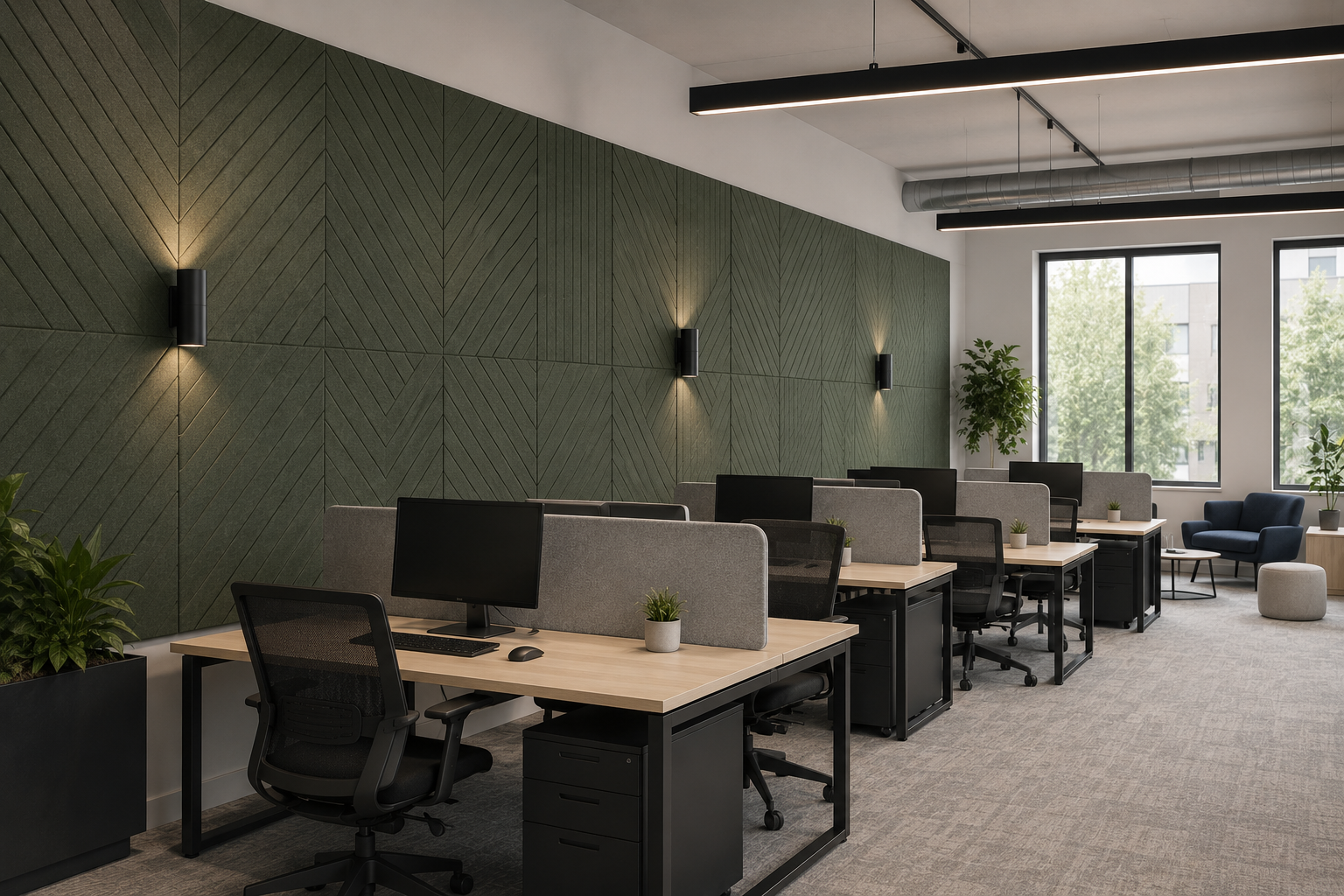
Noise has a big impact on how a space feels.
In an office, it can make focus harder. In a school, it can affect concentration and communication. In a meeting room, it can make conversations less clear, video calls more difficult and group discussions more tiring than they need to be.
That is where acoustic wall panels can make a real difference.
They do more than add a decorative finish to a wall. Acoustic panels help absorb sound, reduce reverberation and create quieter, calmer and more usable spaces. This makes them worth considering when planning office furniture, classroom upgrades, meeting room improvements or wider workplace refurbishments.
Installation matters
The performance of acoustic panels is not just about the panel itself. The way they are installed also plays an important role.
For example, fitting acoustic panels with an air gap between the panel and the wall can improve sound absorption, particularly at lower frequencies. Panels fixed directly to a wall can still help, but panels installed with the right mounting method can often perform more effectively.
This is especially useful in larger rooms, meeting spaces, breakout areas, shared learning environments and open-plan spaces where sound can travel, bounce and build up more easily.
What acoustic wall panels are designed to do
Acoustic wall panels help control how sound behaves inside a room.
When sound hits hard surfaces such as painted walls, glass partitions, solid floors or ceilings, it reflects back into the space. This can make rooms feel echoey, noisy or uncomfortable, even when they are not especially busy.
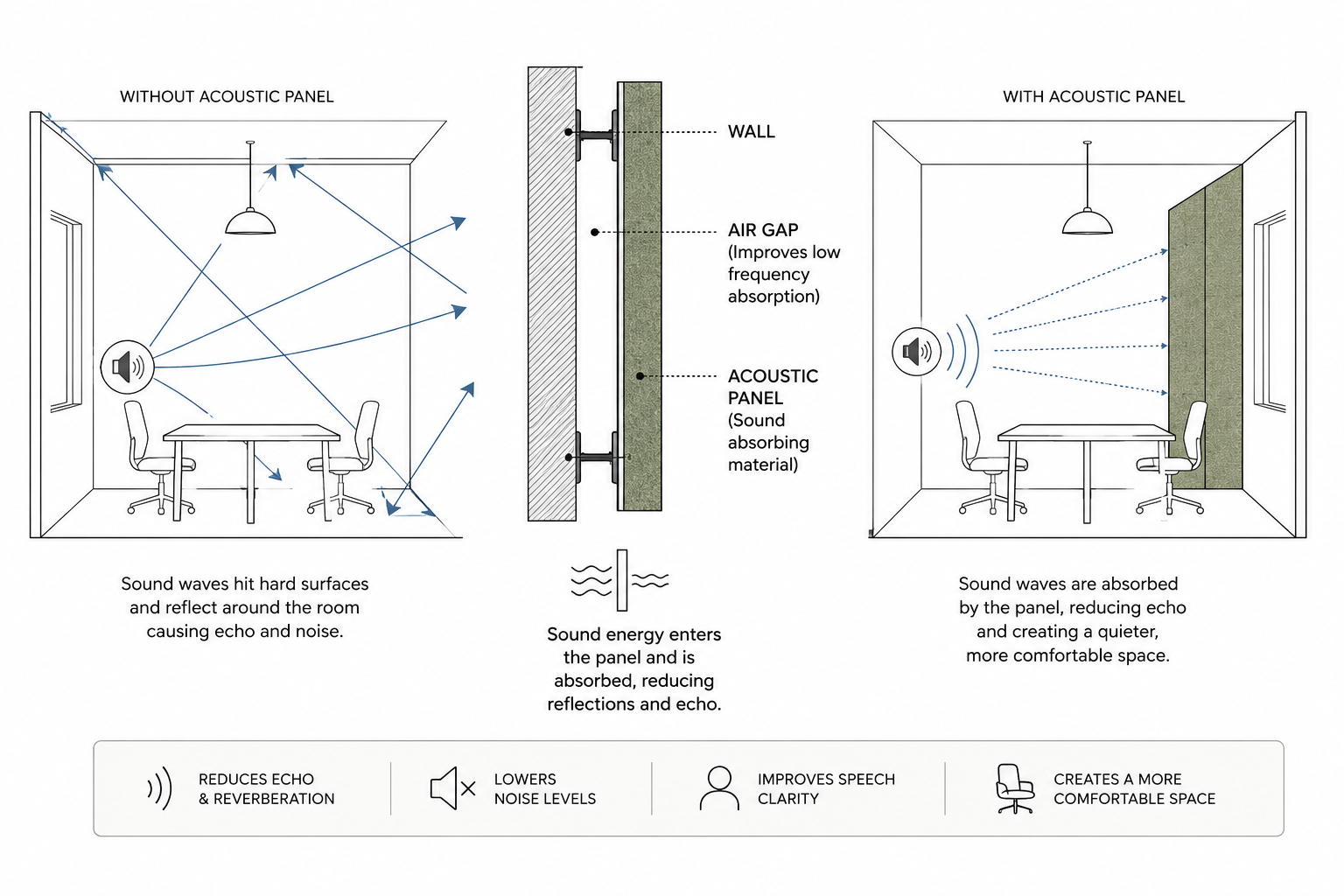
Acoustic panels absorb part of that sound energy. This helps reduce echo, improve speech clarity and make the space feel more comfortable to use.
For example, a meeting room may look professional, but if it has hard walls, hard floors and very little soft material, it can still feel poor during presentations, video calls or group discussions.
In workplace and education settings, acoustic boards can help support:
- Clearer conversations in meeting rooms and offices
- Better concentration in classrooms and study spaces
- More comfortable staff rooms and breakout areas
- Reduced noise build-up in reception areas and corridors
- A more professional finish to communal spaces
Why Acoustic Board is a practical option
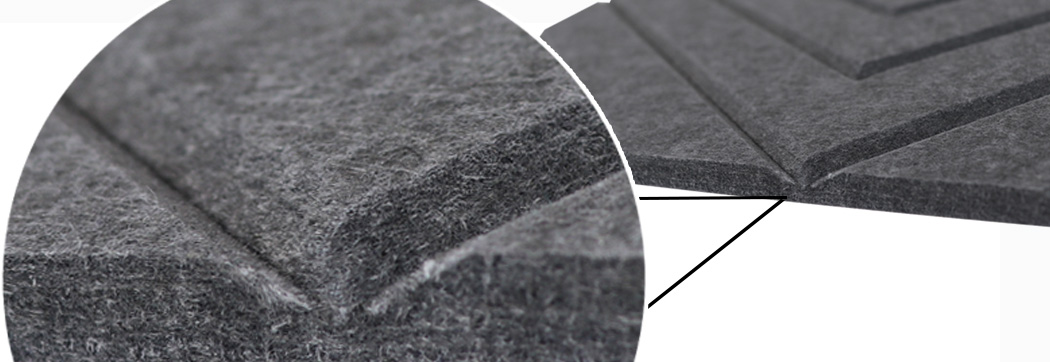
Acoustic Board is designed for commercial interiors, including walls, ceilings and screens. Most boards are made from 100% PET, with more than 75% recycled PET material, making them a strong choice for buyers looking at both acoustic performance and sustainability.
The boards are available in a range of thicknesses, giving flexibility depending on the level of performance, durability and finish required.
They are also available in a wide choice of stocked colours. This means they can be used as a subtle background finish or as a more visible design feature.
Colour options include practical neutrals such as black, white, light grey and slate grey, as well as stronger colours including red, green, purple, golden sunset, sage green and Oxford blue.
This makes Acoustic Board suitable for corporate offices, schools, colleges, reception areas, meeting rooms, libraries and collaborative spaces.
Decorative designs, not just plain panels
Acoustic panels do not need to look plain or overly functional.
Engraved wall panel designs such as Horizontal, Diagonal, Lattice, Line and Chevron can add texture, detail and visual interest while still helping with sound absorption.
This is useful for buyers who want acoustic performance without making the space feel too technical or clinical.
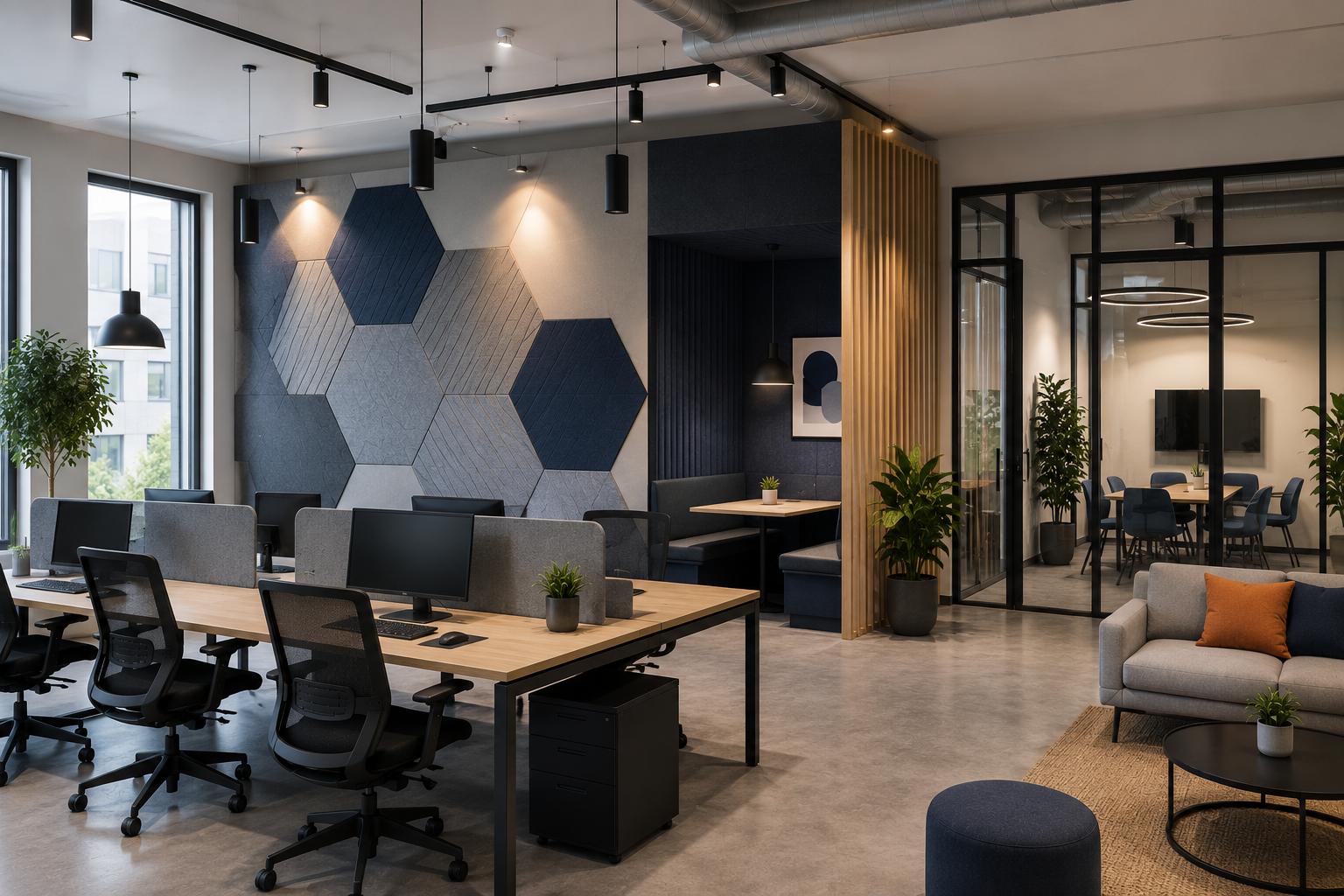
For example, Line boards could create a clean feature wall in a meeting room, while Chevron or Lattice designs could add a more considered finish to a breakout area, staff room or reception space.
Custom and bespoke designs are also available on request, giving more flexibility for projects where colour, pattern or layout needs to match an existing interior scheme.
Key points to consider before choosing acoustic panels
Before choosing acoustic wall panels, it is worth thinking about how the room is used day to day.
A busy admin office may need help with background noise. A meeting room may need better speech clarity. A school corridor, library or staff area may need a product that improves comfort while also standing up to regular use.
When comparing options, consider:
- Whether the space has echo, background noise or privacy issues
- Whether panels will be fitted to walls, ceilings or screens
- Which board thickness is most suitable
- Whether an air gap mounting system could improve performance
- Which colours or engraved patterns suit the environment
- Fire rating, durability and long-term appearance
- Whether standard or bespoke designs are required
A quieter space with a better finish
Acoustic wall panels offer a practical way to improve comfort, reduce reverberation and enhance the appearance of offices, schools and shared spaces.
They can be used as part of a refurbishment, a furniture project or a smaller acoustic upgrade, depending on the space, budget and level of performance required.
For buyers of office furniture, workplace interiors and education environments, Acoustic Board provides a useful balance of performance, design and flexibility.
To discuss Acoustic Board options, including colours, thicknesses, engraved designs and installation methods, contact our team for advice on the best solution for your space.
Download our guide - Click here
Published on 08 July 2026